Cross border freight is not stopping, but the rules that shape North American trucking may soon begin to change.
The United States’ decision not to extend the United States-Mexico-Canada Agreement (USMCA) in its current form has introduced new uncertainty for carriers, shippers and fleet managers planning for the years ahead.
It is important to be clear about what has and has not happened.
USMCA has not expired. The agreement remains in effect, and trade continues under its existing framework. However, the decision begins a period of annual reviews and continued negotiations among the United States, Mexico and Canada.
For trucking companies, shippers and equipment providers, the immediate concern is not the disappearance of cross border freight. It is the difficulty of making long term decisions when the future rules are unsettled.
Why USMCA Matters to Trucking
Manufacturing and distribution networks across the United States, Mexico and Canada have become deeply interconnected. Components may cross a border several times before a finished product reaches its customer, and trucks carry the majority of the freight value moving between the three countries. According to industry and government trade data, trucks move well over half of the merchandise trade between the United States, Canada and Mexico by value, making trucking one of the industries most directly affected by changes in North American trade policy.
When trade rules are predictable, companies can make long term decisions about plants, suppliers, distribution centers, freight contracts and equipment.
When those rules become uncertain, companies often become more cautious.
Manufacturers may delay capital projects or reconsider sourcing locations. Shippers may conduct more frequent bids, shorten contract periods or adjust routing guides. Carriers may find that certain lanes grow quickly while others weaken as production and distribution patterns change.
Two Potential Effects on Freight
The USMCA review could affect trucking in two very different ways.
In the near term, prolonged negotiations may discourage investment and make fleets more reluctant to commit capital. Equipment purchases can be postponed when customers lack confidence about future freight volumes or lane structures.
Over the longer term, policies intended to increase manufacturing in the United States and strengthen North American content requirements could generate additional regional freight. More domestic or nearshore manufacturing would still require raw materials, components and finished products to move between suppliers, plants, warehouses and customers.
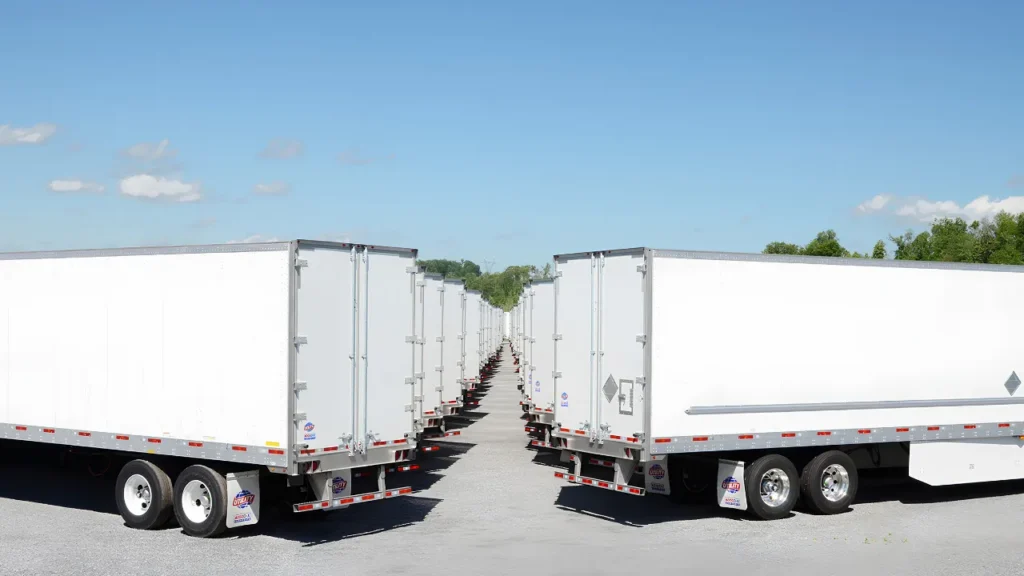
Increased domestic manufacturing would likely create additional demand for dry van trailers, refrigerated trailers and flatbeds as goods move throughout the supply chain. That could create meaningful trucking demand, but not necessarily in the same lanes, industries or locations that benefit today.
Flexibility Becomes More Valuable
For fleets, the practical response is not to guess which political outcome will occur. It is to preserve operating and financial flexibility.
That may include:
- Balancing owned equipment with leasing and rental
- Avoiding excessive dependence on one customer, commodity or freight lane
- Reviewing trailer specifications against changing customer requirements
- Planning equipment needs earlier when pricing or availability is uncertain
- Maintaining existing equipment so replacement decisions are not forced
- Working with suppliers capable of supporting equipment throughout its operating life
Rental and leasing can be particularly useful when freight demand is uncertain or changing. These options allow fleets to add capacity, respond to new lanes or customer requirements, and preserve capital without immediately committing to a long term equipment purchase.
Learn more about Atlantic Utility’s trailer leasing and rental solutions and discover which option is right for your operation: atlanticutility.com/rental-and-leasing/
For some fleets, purchasing will remain the best solution. For others, leasing or short term rental may provide the flexibility needed until freight patterns and trade policy become clearer. The right answer depends on the customer’s operating requirements, expected utilization and tolerance for risk.
How Atlantic Utility Can Help
Atlantic Utility Trailer Sales works with customers to evaluate equipment needs across purchasing, leasing and rental options.
Beyond supplying equipment, our goal is to help fleets build an acquisition strategy that aligns with changing freight volumes, cash flow objectives and long term operational needs.
That may mean purchasing trailers for established, long term needs, leasing equipment to preserve capital and provide predictable costs, or using rental equipment to respond to temporary demand, new business or uncertain lane volumes.
As freight patterns and customer requirements evolve, fleets should review whether their current equipment strategy still provides the right balance of cost, capacity and flexibility.
Planning your fleet for an uncertain market?
Whether you are purchasing, leasing or renting trailers, Atlantic Utility Trailer Sales can help you build an equipment strategy that fits your operation today while remaining flexible for tomorrow.
Contact our team today to discuss available inventory, rental options and leasing solutions.
The Bottom Line
The current USMCA review is not an immediate freight crisis. It is a reminder that trade policy can influence freight volumes, equipment costs and manufacturing locations long before an agreement formally changes or expires.
Fleets should follow the negotiations, but they should not attempt to build their equipment strategy around political predictions.
The more practical approach is to understand where their freight originates, how exposed their customers are to cross border trade and how much flexibility they may need if those patterns change.
In an uncertain market, the ability to adjust may be more valuable than attempting to predict the final outcome.